The Short Answer
The right box style is determined by four factors in order: product weight, fragility, sales channel, and branding goal. Mailer boxes suit branded e-commerce shipping, tuck boxes and folding cartons suit lightweight retail, rigid boxes suit premium presentation, and heavy-duty corrugated suits fragile or heavy freight. Match the format to how the product ships and sells, not to which box looks best in a photo.
The Four Box Styles, Defined
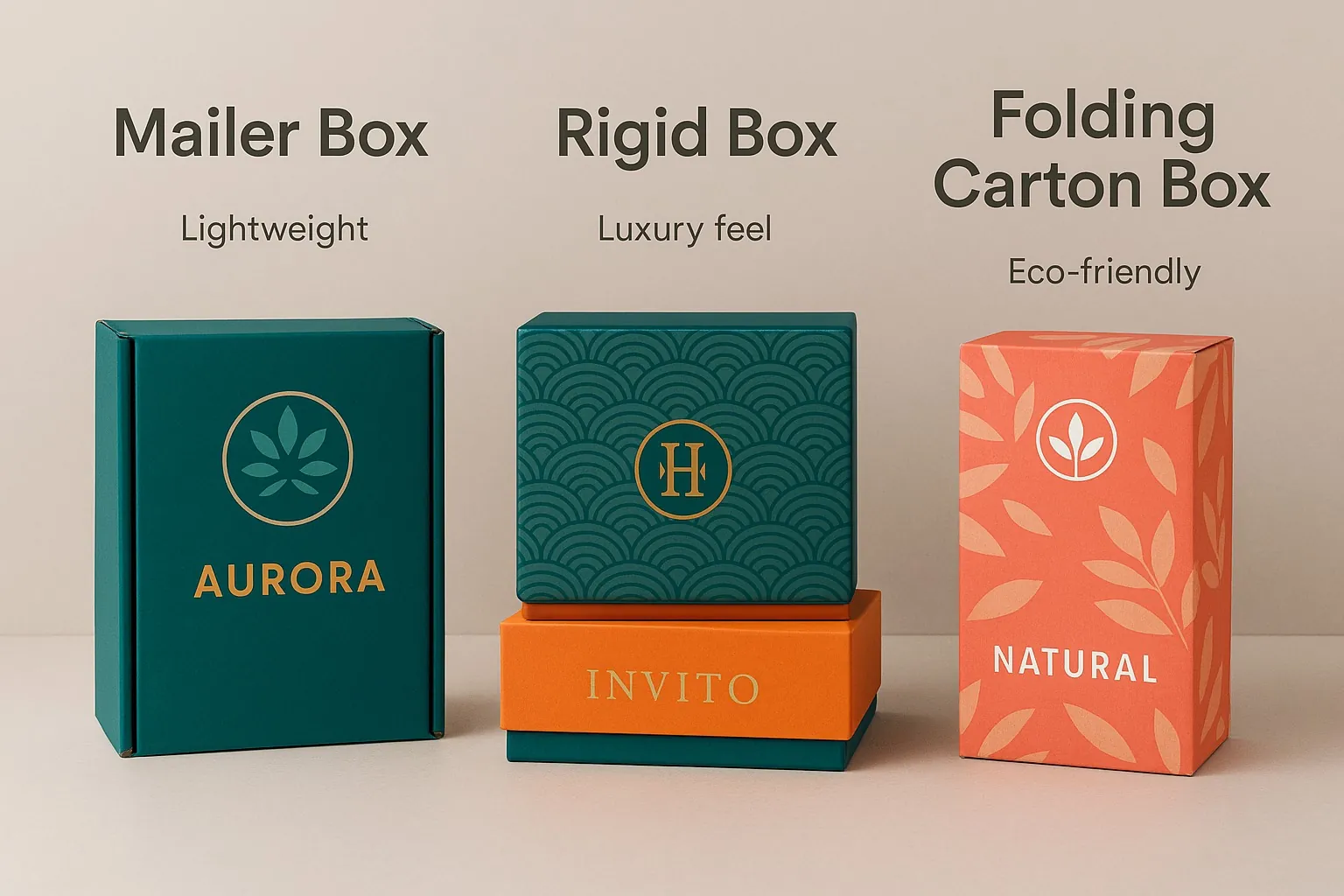
Four formats cover almost every consumer product. A mailer box is a self-locking corrugated box that ships flat, folds without tape, and serves as both shipping container and branded packaging in one. A tuck box, or folding carton, is a lightweight paperboard box with tuck-end flaps, built for retail shelves and detailed print rather than solo shipping. A rigid box is a thick, non-collapsible set-up box that signals premium value and protects high-end goods. Heavy-duty corrugated is the fluted shipping box built to survive stacking, pressure, and long transit. The categories are not interchangeable because each solves a different problem. Corrugated cardboard, with its fluted middle layer, is a shock absorber for transit; paperboard is a smooth, printable surface for the shelf. A mailer sits between the two, protective enough to ship yet polished enough to brand. Understanding what each format is for is the whole basis of choosing correctly.
Question 1: How Heavy and Fragile Is the Product?
Weight and fragility decide the structural floor. A folding carton offers minimal standalone protection and should never be a solo shipper for anything breakable, because paperboard bends and crushes under courier pressure. A mailer box, built from corrugated with a fluted cushioning layer, handles most direct-to-consumer weights and protects far better than a carton on its own. For genuinely fragile or heavy goods, the answer is stronger corrugated, often double-wall, paired with a fitted insert. Glass, ceramics, and electronics need the box to carry protective load the product cannot. The rule is simple: the heavier or more fragile the item, the more the structure must do, and paperboard formats drop out of contention first. A light product can still be damaged if it shifts, so internal fit matters as much as board strength. Inserts are the quiet half of this decision. A die-cut corrugated insert, a molded pulp tray, or a set of dividers immobilizes the product so it never contacts a box wall, which is what actually prevents transit damage. The outer format sets the protective ceiling, but the insert determines whether the product uses it. A fragile item in a strong box that still rattles is barely safer than one in a weak box; the two parts of the system have to be specified together, not chosen one at a time.
Question 2: Who Sees the Box, and Where?
Sales channel decides which surface matters. If the product sells on a retail shelf, the box competes visually against neighbors, and a tuck box or folding carton gives the smooth, printable panels that hold fine detail, barcodes, and product copy. Retail packaging is primarily a display surface, so print quality and shelf presence outrank shipping strength. If the product ships direct to a customer, the box is the whole brand moment, and a mailer box delivers protection and a branded unboxing experience at once. There is no shelf to win, only a doorstep to impress. When both channels apply, many brands run a folding carton as the retail primary and a mailer as the shipping layer. The channel, not the product alone, tells you which surface to invest in.
Question 3: What Does the Brand Need to Signal?
Branding goal breaks a tie between structurally valid options. When presentation is core to the product, a rigid box earns its higher cost: the thick, non-collapsible structure feels premium in the hand and transfers that impression to the product. Luxury goods, gifting, and high-price items are where rigid boxes justify themselves, because the packaging is part of the value proposition rather than a container for it. For accessible and modern positioning, a printed mailer box or a well-finished tuck box delivers strong brand presence at a fraction of the rigid cost. Finishes do much of the work across every format: soft-touch lamination, spot UV, foil stamping, and embossing separate considered packaging from generic, and they add less cost than most brands expect. The structure sets the tier; the finish sharpens it.
Explore Our Packaging
The Comparison Table
The table below condenses the decision. Read it by starting from the product, not the format: find the row that matches how heavy, fragile, and visible the item is, and the box style follows. Print quality, shipping strength, and storage footprint each trade against the others, so the right choice is the one that fits the product and channel rather than the one that scores highest on any single line.
| Box style | Ships solo? | Print surface | Best for |
|---|---|---|---|
| Mailer box | Yes (corrugated) | Exterior + interior | Branded DTC e-commerce, subscriptions |
| Tuck box / folding carton | No (needs outer) | Best, fine detail | Retail shelf, lightweight goods |
| Rigid box | No (needs outer) | Premium wrap + reveal | Luxury, gifting, high-price items |
| Heavy-duty corrugated | Yes | Functional | Fragile, heavy, or freight shipments |
A Note on Corrugated: Flutes and Walls
Not all corrugated is equal, and the difference decides protection. Corrugated board is rated by flute profile, the size of the wavy inner layer: E-flute is thin and print-friendly, common in mailer boxes and small cartons; B-flute is a touch thicker with more crush resistance; C-flute is the standard shipping-box grade; and BC double-wall stacks two flutes for heavy or fragile freight. A finer flute prints sharper and folds cleaner, while a coarser or doubled flute carries more load. Wall count matters just as much. Single-wall corrugated handles most direct-to-consumer parcels, while double-wall is the step up for weight, stacking, or genuinely breakable contents. Choosing a mailer box means choosing a flute as well: E-flute keeps the print crisp for a light branded product, while a heavier product calls for a sturdier profile. Matching the flute to the load is the detail that separates a box that protects from one that arrives dented, and it is a specification most brands never think to ask about until a shipment fails.
Storage and Fulfillment Trade-Offs
The right box on a spec sheet can be the wrong box in a warehouse. Mailer boxes and folding cartons ship flat and store efficiently, folding at the packing station only when needed, which keeps shelf and pallet space low. Rigid boxes do not collapse; they arrive assembled and consume far more storage per unit, which is a real cost for a brand fulfilling in-house or from a small space. Assembly speed is the other operational factor. Folding cartons with an auto-lock or tuck base form quickly, while a mailer box takes a few more folds to lock into shape. For a high-volume packing line, those seconds add up. The structurally ideal format still has to fit the way orders are actually packed and stored, so a brand choosing a box should weigh the fulfillment reality alongside the protection and branding it wants.
Common Mistakes When Choosing a Box
The most expensive mistake is a format-to-positioning mismatch. A luxury brand shipping in a plain shipping box loses equity with every delivery, and a value product in an over-built rigid box wastes cost the price point cannot support. The box should agree with what the product is and what it costs. A second common error is treating all corrugated as identical, when board grade and wall count determine whether a box protects or fails. The other frequent misstep is ignoring internal fit. The right outer format still needs the product held still, so inserts, dividers, or a right-sized cavity matter as much as the box itself. An oversized box in any style invites damage and inflates shipping cost through dimensional weight. Choosing the format is step one; sizing it to the product and adding the right internal support is what makes the choice actually work.
Choosing With Confidence
Run the four questions in order and the format resolves itself: weight and fragility set the structural floor, channel decides which surface to invest in, and branding goal breaks any remaining tie. Most products land on a clear answer well before the fourth question, because a heavy fragile item shipping direct simply cannot be a folding carton no matter how good the print would look. Packify produces custom mailer boxes, tuck boxes, and rigid boxes cut to your product with full-color and Pantone printing, no minimum order, production in 8 to 10 business days, and free shipping across the continental US. Because there is no minimum, testing two formats against the same product costs nothing in committed volume, which is the surest way to settle a close call. Choose the box for how the product ships and sells, order a sample run, and let the real package confirm the decision. A format that looks right on paper sometimes feels wrong in the hand, and the only way to know for certain is to hold the finished box with the product inside it.
Frequently Asked Questions
Our Packaging Products
Elevate Your Brand With Custom Packaging
Get packaging designed for your brand. Free shipping. No minimums.
Start TodayAuthor
Theo Marchetti
Theo Marchetti is a structural packaging designer who has speced box formats for DTC, retail, and subscription brands across a decade of product launches. He writes about matching box structure to how a product actually ships and sells.