
The Fast Answer: Empty Box Weight Chart by Size
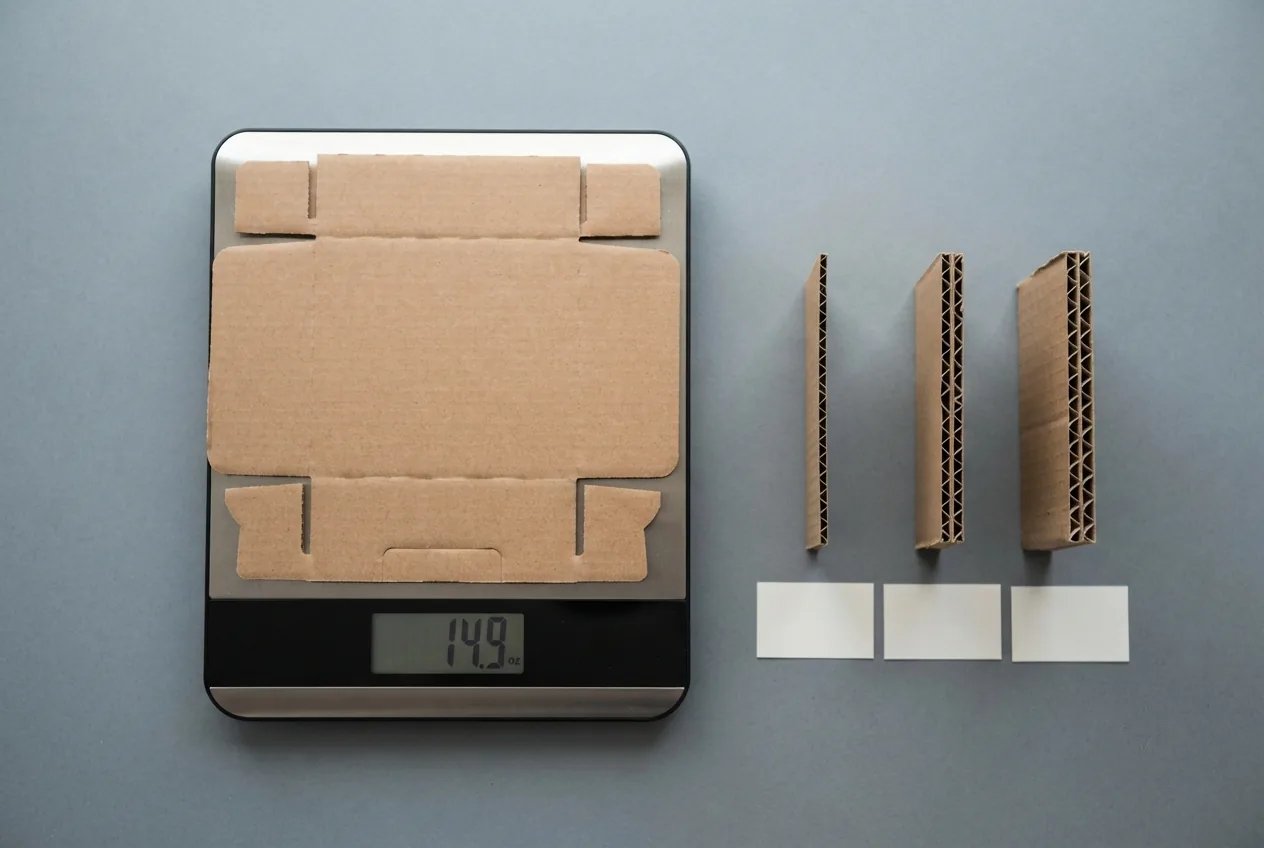
An empty standard cardboard box weighs between 0.25 and 2.7 pounds. A 6×6×6 inch single-wall box weighs roughly 4 ounces. A 12×12×12 weighs about 1 pound. A 20×20×20 reaches 2.6 pounds. Double-wall construction adds 60 to 80 percent on top of any of those numbers. These figures cover regular slotted containers (RSC), the standard shipping box style, at the flute grade each size is normally supplied in. Weights are the empty box with no tape, void fill, or product. The last column is the one that changes decisions. FedEx and UPS bill the greater of actual weight or dimensional weight, so an empty 18×18×18 weighing 33.6 ounces gets billed as 42 pounds the second you tape it shut. Anywhere the DIM figure towers over the empty weight, the box’s grams are already irrelevant and the cubic inches are the whole problem. Two variables move cardboard box weight. Surface area grows with the square of dimension, so doubling a box’s edge length roughly quadruples its weight. And flute grade sets the grams per square meter of board, which is where most of the variance lives.
| Box Size (in) | Flute | Wall | Empty Weight (oz) | Empty Weight (g) | DIM Billed Weight (lb, ÷139) |
|---|---|---|---|---|---|
| 6 × 6 × 6 | B | Single | 4.0 | 113 | 2 |
| 8 × 8 × 8 | B | Single | 6.4 | 181 | 4 |
| 10 × 10 × 10 | C | Single | 10.2 | 290 | 8 |
| 12 × 12 × 12 | C | Single | 14.9 | 422 | 13 |
| 14 × 14 × 14 | C | Single | 20.2 | 572 | 20 |
| 16 × 16 × 16 | C | Single | 26.1 | 740 | 30 |
| 18 × 18 × 18 | C | Single | 33.6 | 953 | 42 |
| 20 × 20 × 20 | C | Single | 41.6 | 1,179 | 58 |
| 24 × 18 × 18 | BC | Double | 62.9 | 1,783 | 56 |
Mailer Boxes Run Considerably Lighter
Mailer boxes run considerably lighter because they use E-flute and a single-piece blank with no separate lid. Here is what the common e-commerce sizes weigh empty. A 12×9×4 mailer box at 6 ounces versus a 12×9×4 RSC at 9 ounces is a 3 ounce gap. Across 5,000 shipments that is 937 pounds of billed weight you are paying to move for no reason.
| Mailer Size (in) | Flute | Empty Weight (oz) | Empty Weight (g) |
|---|---|---|---|
| 8 × 6 × 2 | E | 2.3 | 64 |
| 10 × 8 × 3 | E | 3.8 | 109 |
| 12 × 9 × 4 | E | 5.9 | 168 |
| 14 × 10 × 4 | E | 7.4 | 209 |
| 16 × 12 × 4 | E | 9.2 | 261 |
Flute Grade Is the Real Variable
Corrugated cardboard is not one material. It is a fluted medium glued between two liners, and the height of that flute determines board thickness, stiffness, and weight per square meter. Corrugated box weight is expressed in gsm, grams per square meter of finished combined board. E-flute is the default for retail-facing custom mailer boxes because 1.6 mm of caliper prints cleanly and folds without cracking. C-flute is the workhorse of warehouse corrugated boxes because it delivers the most stacking strength per gram of fiber. B-flute sits between them and is the standard for boxes under 10 inches on their longest side. Notice that E-flute is not automatically lighter in practice. E-flute at 425 gsm sounds thin next to C-flute at 545 gsm, but E-flute boxes need more material in the blank to hit the same rigidity, and brands often specify a heavier liner to compensate. The gsm figure only tells you weight if you also know the blank area.
| Flute | Caliper | Flutes per Linear Foot | Board Weight (gsm) | Typical ECT |
|---|---|---|---|---|
| F-flute | 0.8 mm | approx. 128 | 350 | 26 |
| E-flute | 1.6 mm | approx. 90 | 425 | 26 to 32 |
| B-flute | 3.2 mm | approx. 47 | 500 | 32 |
| C-flute | 4.0 mm | approx. 39 | 545 | 32 to 44 |
Explore Our Packaging
Single-Wall, Double-Wall, and Triple-Wall Weight Multipliers
Wall count is the single largest weight decision you make. Each added wall means another fluted medium plus another liner. Apply those multipliers directly. That 16×16×16 single-wall box at 1.6 pounds becomes 2.8 pounds in BC double-wall and 4.4 pounds in triple-wall. The strength gain is real: BC double-wall roughly doubles stacking strength over single-wall C. But you are buying that strength with billable weight on every single parcel, forever. The rule most operators land on: single-wall handles anything under 65 pounds of contents in a box under 20 inches. Double-wall starts earning its weight above 65 pounds or when the load will be palletized more than four high. Triple-wall belongs on industrial freight, not parcel.
| Construction | Caliper | Board Weight (gsm) | Weight vs Single-Wall C | Typical ECT |
|---|---|---|---|---|
| Single-wall C | 4.0 mm | 545 | 1.0× | 32 to 44 |
| Double-wall EB | 4.8 mm | 750 | 1.4× | 40 to 48 |
| Double-wall BC | 6.5 mm | 900 | 1.7× | 48 to 51 |
| Triple-wall BCC | 11.5 mm | 1,450 | 2.7× | 82 to 110 |
How to Calculate the Weight of Any Box Yourself
You do not need a shipping box weight calculator for this. Two multiplications get you within 5 percent. Step one, find the blank area. For an RSC in millimeters, the blank length is 2 × (Length + Width) + 35 mm for the glue tab, and the blank width is Height + Width. Step two, multiply the blank area in square meters by the board’s gsm, and the result is grams. Worked example, a 12×12×12 inch C-flute RSC. Convert to 305 × 305 × 305 mm. Blank length = 2 × (305 + 305) + 35 = 1,255 mm. Blank width = 305 + 305 = 610 mm. Area = 1.255 × 0.610 = 0.766 square meters. At 550 gsm that is 421 grams, or 0.93 pounds. Weigh a real 12×12×12 and you will read about 15 ounces. The formula slightly underestimates because it ignores the crush and moisture content of the board. Corrugated sitting in a humid warehouse absorbs moisture and gains roughly 2 to 4 percent in weight, which is why the same box weighs more in a Houston August than a Denver January.
Where Empty Box Weight Actually Costs You
Box weight hits your invoice through two separate mechanisms, and most sellers only watch one. The first is actual weight thresholds. USPS Ground Advantage prices in tiers at 4, 8, 12, and 15.999 ounces before jumping to pound-based rates. A 12.5 ounce product in a 3 ounce E-flute mailer totals 15.5 ounces and stays in the sub-16-ounce tier. Put the identical product in a 6 ounce B-flute RSC and you hit 18.5 ounces, cross into the 1-pound bracket, and pay the higher rate on every unit. The box weight decided the price, not the product. The second is dimensional weight. FedEx and UPS bill the greater of actual weight or DIM weight, calculated as Length × Width × Height divided by 139 for domestic retail accounts. A 12×12×12 box computes to 1,728 cubic inches divided by 139, which equals 12.4, rounded to 13 billable pounds. Whether your box weighs 15 ounces or 30 ounces is irrelevant once dimensional weight takes over. Above the DIM threshold, shaving grams saves nothing and right-sizing the box saves everything. The practical split: below roughly 1 pound total, actual weight rules and every gram of board matters. Above that, dimensions rule and board weight is noise. Know which side of that line your SKU sits on before you spend money re-engineering anything.
Cutting Grams Without Cutting Protection
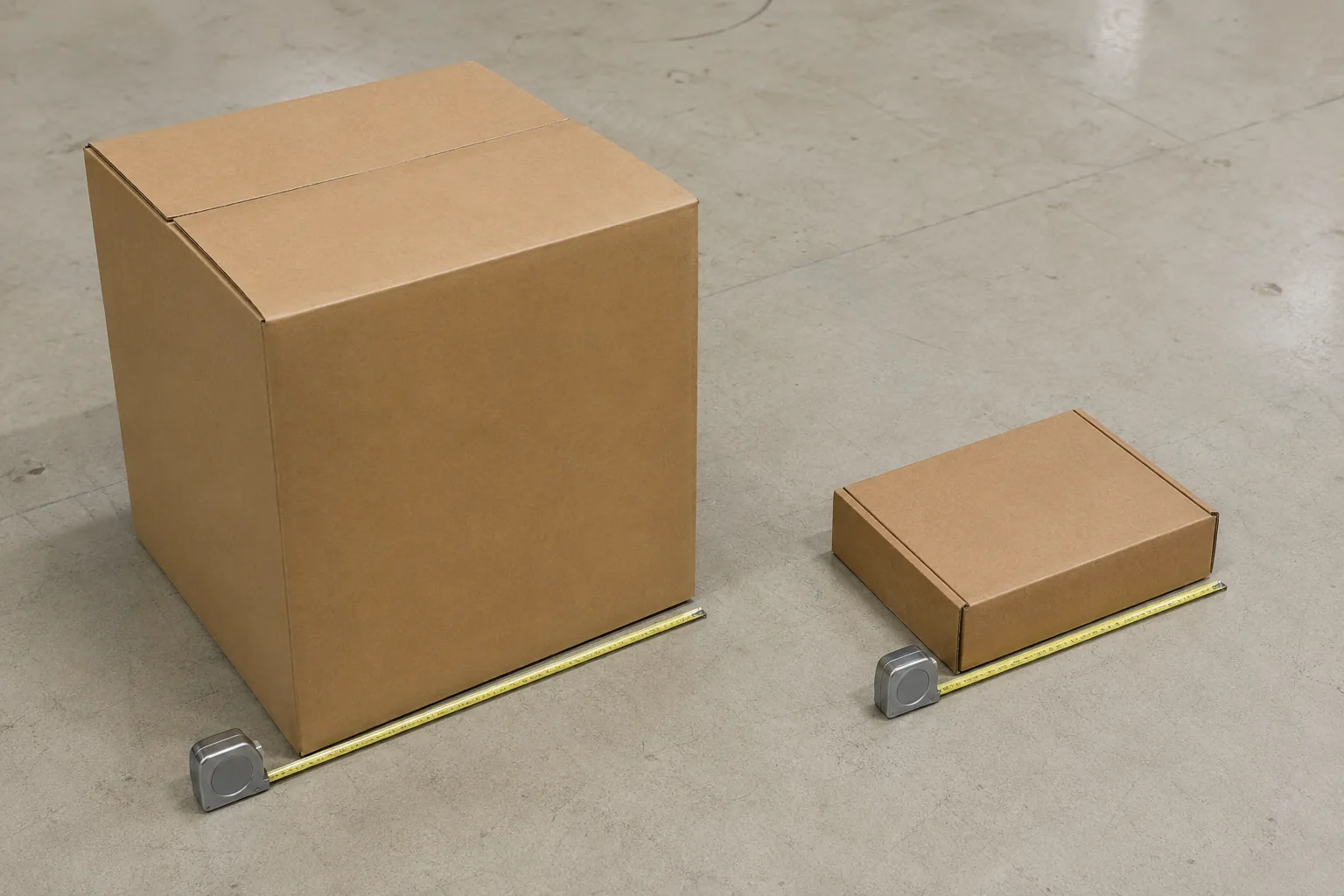
Four levers actually move empty box weight, in descending order of impact. First, drop a wall. Going from BC double-wall to single-wall C on a 14×14×14 removes about 1 pound per box. This is the biggest available cut and the one most operators are over-specified on, because boxes get spec’d double-wall during a launch panic and nobody revisits it. Second, right-size the dieline. A box cut 2 inches shorter on every dimension loses surface area on all six faces at once. On a 14×14×14 dropping to 12×12×12, that is roughly 5 ounces of board plus a DIM weight reduction from 20 billable pounds to 13. Third, move to E-flute. On sub-3-pound products, switching a small RSC to a custom E-flute mailer box cuts 30 to 40 percent of board weight while improving print quality, which is why nearly all DTC e-commerce packaging standardized on E-flute mailers. Fourth, skip the void fill. Foam peanuts and air pillows are weightless in perception and not in fact. Kraft paper void fill runs about 2 ounces per cubic foot of fill, and a properly sized box needs almost none of it, which is a second payoff from right-sizing. Recycled content does not change any of this meaningfully. A 100 percent recycled liner at 42 pound basis weight weighs the same as a virgin liner at 42 pound basis weight. Sustainable packaging and light packaging are separate decisions, and treating them as one is how brands end up paying for both and getting neither.
Frequently Asked Questions
Our Packaging Products
Elevate Your Brand With Custom Packaging
Get packaging designed for your brand. Free shipping. No minimums.
Start TodayAuthor
Priya Nathan
Priya Nathan spent six years as a shipping cost analyst for DTC brands, auditing carrier invoices and rebuilding packaging specs to kill dimensional weight charges. She has weighed and re-spec’d over 400 SKUs, and once saved a supplement brand $61,000 a year by moving one product from a double-wall RSC to an E-flute mailer.