
The Short Answer
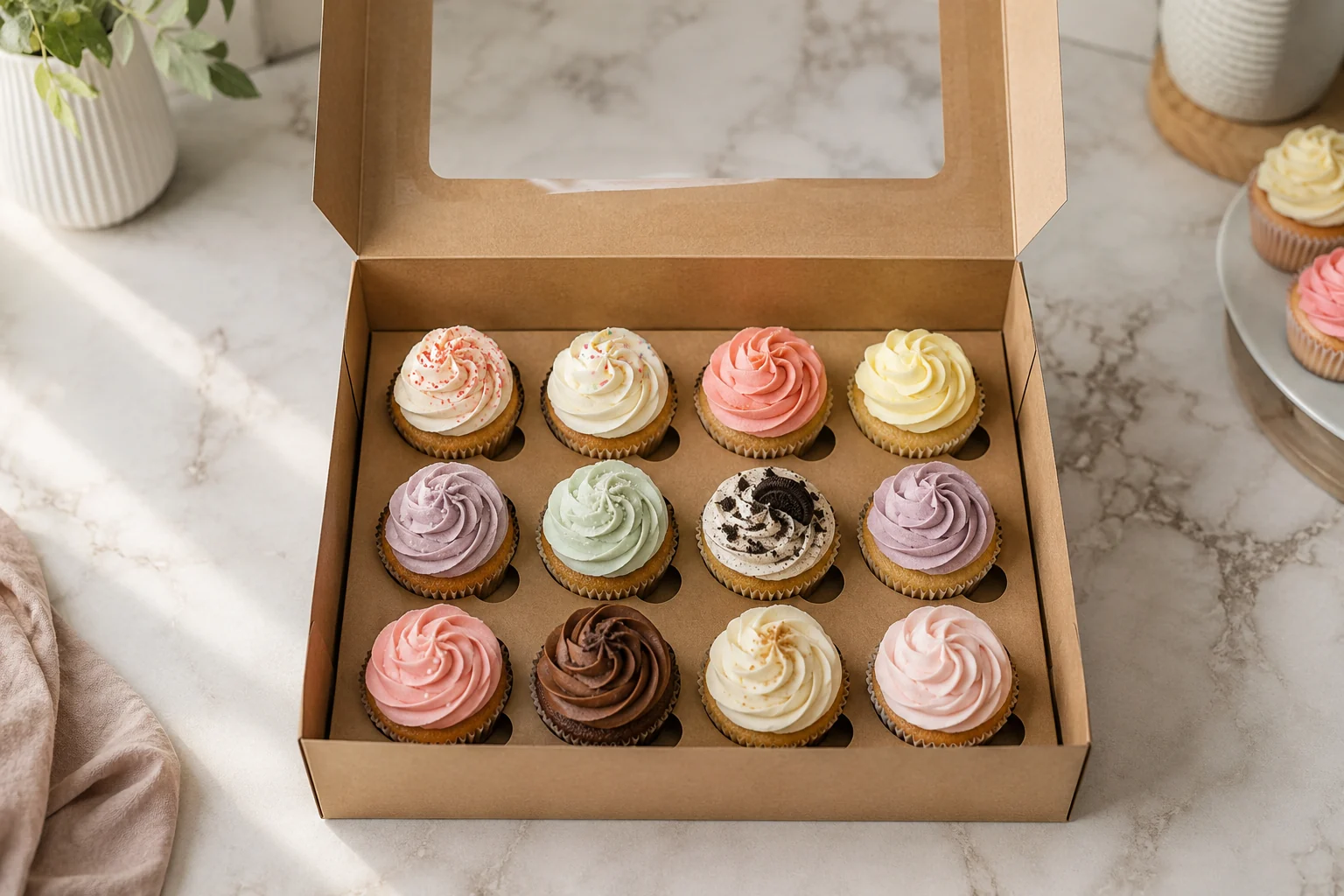
Cupcake box capacity is set by three variables: cavity count, cavity diameter, and interior height. Standard retail boxes hold 1, 2, 4, 6, 12, or 24 cupcakes. A 6-count box measures roughly 10 x 7 x 4 inches, and a 2-inch insert cavity locks a standard cupcake in place.
What Three Variables Actually Set Cupcake Box Capacity
Capacity is not a single number. It is the product of cavity count, cavity diameter, and interior height working together. Cavity count is the headline figure buyers see: a dozen, a half dozen, a single. Cavity diameter decides whether a cupcake sits flush or rattles. Interior height decides whether a tall buttercream swirl arrives intact or smeared against the lid. Get one variable wrong and the stated count becomes meaningless, because a 12-cavity tray built for mini cupcakes will not hold twelve standard ones.
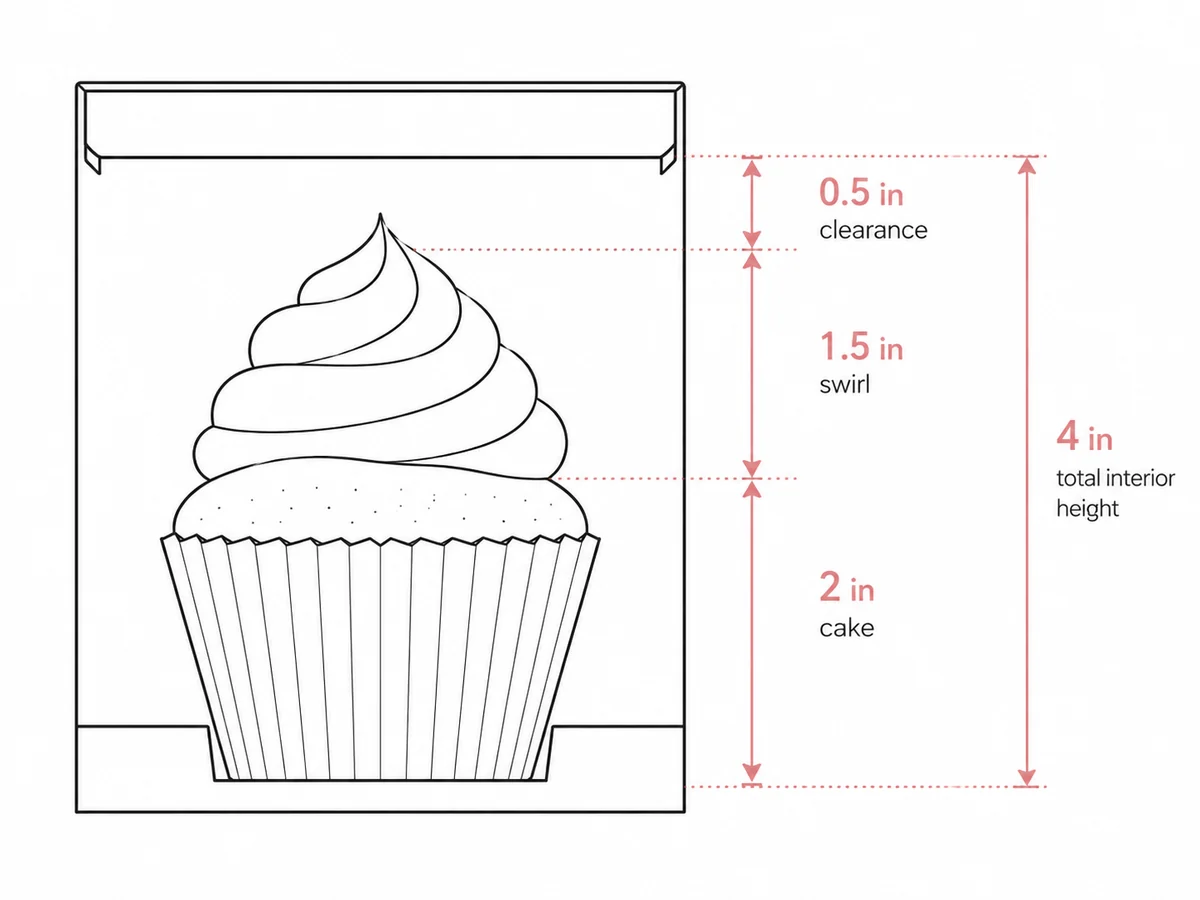
A standard cupcake baked in a 2-inch paper liner finishes 2 to 2.75 inches across the top and 2 inches tall before frosting. Add a piped swirl and total height reaches 3.5 to 4 inches. Those two numbers, roughly 2.75 inches wide and 4 inches tall when frosted, are the constraints every box dimension answers to.
Standard Cupcake Box Sizes and How Many Cupcakes Fit in a Box
The retail market settled on six counts. Each maps to a working interior footprint and a specific buyer. A single box runs 4 x 4 x 4 inches for a gift or sampler. A 2-count runs 7 x 4 x 4 inches. A 4-count runs 7 x 7 x 4 inches for a family four-pack. The 6-count runs 10 x 7 x 4 inches. The 12-count runs 14 x 10 x 4 inches. The 24-count runs 18 x 14 x 4 inches for bulk dessert-table orders.
The 6 cupcake box dimensions of 10 x 7 x 4 inches are the most requested in the US bakery trade, because a half dozen sits between an impulse gift and a full commitment. The 12-count at 14 x 10 x 4 inches carries an event order without becoming unwieldy. Above 24, most bakeries split into multiple boxes rather than build one tray, since a loaded tray past two dozen flexes in the middle and cracks frosting.
| Count | Interior (L x W x H) | Typical use |
|---|---|---|
| 1 | 4 x 4 x 4 in | Single gift or sampler |
| 2 | 7 x 4 x 4 in | Couples, small gift |
| 4 | 7 x 7 x 4 in | Family four-pack |
| 6 | 10 x 7 x 4 in | Half-dozen retail staple |
| 12 | 14 x 10 x 4 in | Dozen, event catering |
| 24 | 18 x 14 x 4 in | Bulk, dessert table |
Calculating Capacity for a Custom Footprint
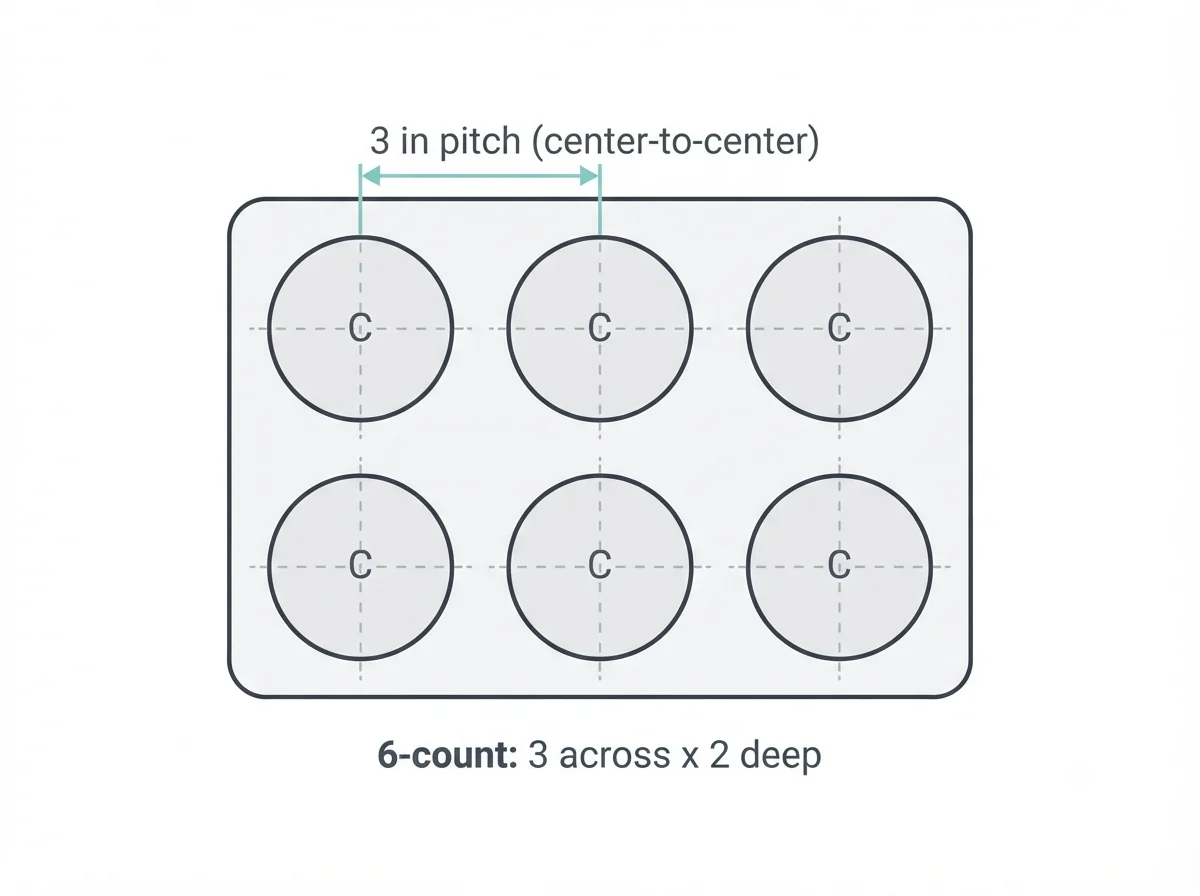
Stock counts cover most orders. A custom footprint follows one rule: cavity pitch. Pitch is the center-to-center spacing between cavities. For a standard cupcake it runs about 3 inches, the 2.75-inch cake plus a thin dividing wall. Divide interior length by pitch, divide interior width by pitch, round each down, and multiply. A 10 x 7-inch interior yields three across and two deep, the 6-count. A 14 x 10-inch interior yields four across and three deep, the dozen. Mini cupcakes drop pitch to about 1.75 inches and double the grid. Jumbos push pitch to 4 inches and thin it out, which is why a jumbo tray on a standard footprint loses half its capacity. Run the arithmetic before you commit to a die line. A footprint that looks large enough on paper can lose a full row once real pitch is applied.
Explore Our Packaging
Match the Cavity to the Cupcake: Standard, Mini, and Jumbo
Cupcake box sizes only mean something once the cavity diameter matches the bake. Three formats dominate. A standard cupcake uses a 2-inch liner and needs a 2 to 2.25-inch cavity, which is the default every stock box assumes. A mini uses a 1.25-inch liner and needs a 1.25 to 1.5-inch cavity, so a mini tray packs 24 into the footprint a standard 12-count uses. A jumbo, also called Texas size, uses a 3.25 to 3.5-inch liner and needs a 2.75 to 3-inch cavity plus taller clearance.
| Format | Liner / cavity diameter | Count per 12-count footprint | Interior height |
|---|---|---|---|
| Standard | 2 in liner / 2 to 2.25 in cavity | 12 | 4 in |
| Mini | 1.25 in liner / 1.25 to 1.5 in cavity | 24 | 4 in |
| Jumbo (Texas) | 3.25 to 3.5 in liner / 2.75 to 3 in cavity | 6 | 5 in |
Sizing for Jumbo (Texas) Cupcakes
Jumbo cupcake boxes are the format buyers most often get wrong. A jumbo baked in a 3.5-inch liner will not seat in a standard 2-inch cavity, and forcing it deforms the liner. As the table above shows, a jumbo needs a 2.75 to 3-inch cavity and 5 inches of height, so a dedicated jumbo tray halves the count: the same footprint that holds twelve standard cupcakes holds six jumbos. Confirm the liner diameter before you order, not after the box arrives.
Why the Insert Does the Real Work
Capacity is a promise the insert keeps. A cupcake box with insert holds its count securely. A box without one is a shell where cakes slide and collide. The insert is the tray of circular cavities that grips each base and turns a stated number into a delivered one.
Three insert materials cover the market. Kraft paperboard inserts, cut from the same 18 to 24-point board as the box, are recyclable, compostable, and the standard for eco-friendly packaging. Clear rPET inserts show the product through a window lid and wipe clean of grease. Corrugated cardboard inserts add rigidity for 12 and 24-count trays that carry real weight.
Cavity depth matters as much as diameter. A shallow 0.75-inch cavity grips the liner base. A deep 1.5-inch cavity cradles more of the cake and survives rougher handling, which is what e-commerce packaging demands when a courier stacks parcels sideways.
Interior Height and Frosting Clearance
Height is the variable buyers forget until a lid crushes a swirl. A standard 4-inch interior clears a 2-inch cake plus a 1.5-inch swirl with a small margin. A tall Italian meringue or a stacked candy topper needs 5 inches.
Lid style changes usable height. A two-piece box with a lift-off lid gives the full stated interior, since the lid sits above the cavity plane. A hinged auto-lock lid, folded from a single blank, steals roughly a quarter inch where it tucks into the front wall, so a 4-inch auto-lock box clears closer to 3.75 inches. For tall swirls, specify a two-piece lid, and confirm which style a stated height refers to, because catalog figures usually list the flat interior before lid geometry takes its cut.
Window lids shift the math further. A PET window set into the lid keeps the same interior height but turns the box into a display piece. This is where custom packaging earns its keep: a printed sleeve and a clear window turn a functional carton into premium packaging that justifies a higher shelf price and sharpens the unboxing experience.
Board Grade and the Weight Your Box Carries
A frosted standard cupcake weighs roughly 3.5 ounces. A dozen with its tray runs close to 3 pounds. That load dictates board grade. Single and 6-count boxes hold their shape in 18 to 24-point SBS or clay-coated board. Once you cross a dozen, E-flute corrugated cardboard, about 1.5 mm thick, stops the base from bowing. For shipping rather than counter handling, B-flute or a double tray adds crush resistance. A stacked B-flute base tolerates roughly 25 pounds of top load, enough to survive a courier resting a second parcel on top.
Bakery boxes built on the right board protect margin, because a collapsed dozen is a full refund plus a lost customer. Recycled kraft corrugate carries the same 3-pound load as virgin board at comparable cost, so choosing sustainable packaging is not a trade against strength. It is the same structural spec with a lighter footprint.
Frequently Asked Questions
Our Packaging Products
Elevate Your Brand With Custom Packaging
Get packaging designed for your brand. Free shipping. No minimums.
Start TodayAuthor
Jamie Holloway
Jamie Holloway spent nine years running production and packaging for a regional bakery chain, where dialing in cupcake and cake box specs across daily wholesale runs was part of the job. Jamie has stress-tested tray inserts, board grades, and window lids against real delivery routes, and writes about what survives the van, not just what looks good on the shelf.