
The Short Answer
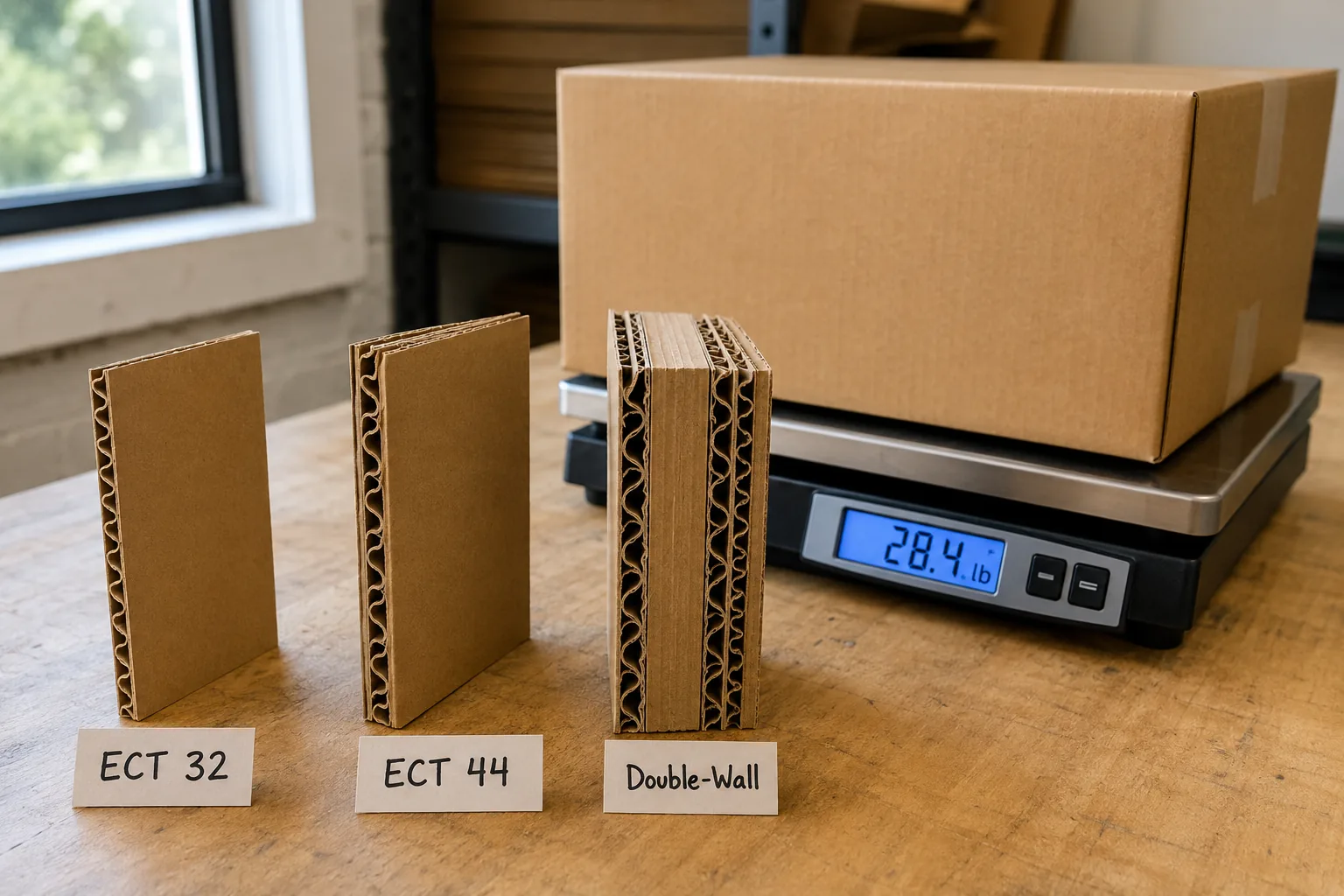
A standard ECT 32 corrugated mailer box safely holds up to 30 pounds of distributed product weight. ECT 44 single-wall raises that ceiling to roughly 65 pounds, and double-wall construction (ECT 48 and above) handles 80 to 100 pounds. Those numbers assume even load distribution and a properly sized box, the two conditions most shipping failures violate.
What ECT Actually Measures (and What It Doesn't)
ECT stands for edge crush test, a laboratory standard (TAPPI T 811) that measures the force in pounds per lineal inch required to crush a vertically oriented strip of corrugated cardboard. An ECT 32 board resists 32 pounds of compressive force per inch of edge before buckling.
Here is the distinction that trips up most first-time buyers: ECT measures stacking strength, not carrying capacity. An ECT rating tells you how much weight a box can support on top of it in a warehouse stack or a delivery truck. The weight a mailer box can hold inside is a related but separate figure, derived from the ECT rating combined with box dimensions, flute profile, and load distribution.
The older Mullen Burst Test (measured in pounds per square inch, e.g., 200#) measures puncture resistance instead. A 200# Mullen board and an ECT 32 board are roughly interchangeable for most e-commerce packaging applications, but ECT boards use less material and cost less per unit, which is why the DTC industry has largely standardized on ECT ratings.
ECT 32: The Workhorse Rating for DTC Shipping
ECT 32 single-wall board is the default specification for custom mailer boxes across the DTC industry, and for good reason. It is the most cost-efficient rating that still satisfies carrier requirements for parcels up to 30 pounds under both UPS and FedEx packaging guidelines.
The comfort threshold matters more than the maximum. Once a shipment passes roughly 20 pounds in an ECT 32 mailer box, real-world handling (drops from 30-inch conveyor heights, corner impacts, compression under 15 other parcels in a delivery van) starts producing seam splits and corner crush at a rate most operators find unacceptable.
The table below maps practical ECT 32 capacity by product category:
| Product Category | Typical Shipped Weight | ECT 32 Fit |
|---|---|---|
| Jewelry with insert | 0.3–1 lb | Comfortable, wide margin |
| Apparel (2–4 garments) | 1–3 lb | Comfortable |
| Books (2–3 hardcovers) | 3–6 lb | Comfortable |
| Electronics accessories | 1–4 lb | Comfortable with protective insert |
| Skincare set (glass jars) | 2–5 lb | Comfortable with protective insert |
| Protein powder / supplements | 5–15 lb | Fits, but the dense load stresses the floor |
| Small home goods (ceramics) | 15–25 lb | Pushes the threshold, consider ECT 44 |
| Cast iron, free weights | 25 lb+ | Exceeds ECT 32, use double-wall |
ECT 44: The Heavy Single-Wall Option
ECT 44 uses heavier linerboard (typically 45–56 lb liners versus the 33–35 lb liners in ECT 32) around the same single-wall flute structure. The result is a board that resists 44 pounds per lineal inch of edge compression and carries parcels up to roughly 65 pounds.
The ECT 32 vs ECT 44 decision comes down to three factors:
1. Shipped weight. Anything consistently above 20 pounds justifies the upgrade. The material cost difference runs approximately 15–20% per unit, far less than the cost of one damaged-goods reshipment.
2. Product density. A 15-pound box of protein powder concentrates force on a small footprint. Dense loads punish the box floor and bottom seams harder than the same weight spread across a large apparel shipment, so dense products deserve the higher rating earlier.
3. Transit distance and touch count. A parcel moving through 8–12 handling touchpoints in a national carrier network absorbs more cumulative abuse than a regional two-touch delivery. Longer chains favor ECT 44.
ECT 44 keeps the single-wall profile, so it folds, scores, and prints exactly like ECT 32. Roll-end tuck-front mailer dielines, full-color exterior printing, and interior flood printing all run identically. You gain strength without sacrificing the unboxing experience.
Explore Our Packaging
Double-Wall: When One Layer of Flute Isn't Enough
A double-wall corrugated box laminates two flute layers (most commonly a B-flute bonded to a C-flute) between three linerboards. Standard double-wall ratings start at ECT 48 (up to 80 pounds gross weight) and extend to ECT 51 (up to 100 pounds). Triple-wall exists above that for industrial freight, but it is functionally never used in mailer-style e-commerce packaging.
Double-wall earns its place in three scenarios:
• Gross weight above 65 pounds. Cast iron cookware, bulk pet food, small furniture components, and fitness equipment all live here.
• Crush-critical contents at any weight. A 12-pound shipment of long-stem glassware may weigh well within ECT 32 limits, yet the consequence of a single corner crush justifies double-wall's superior impact absorption. The layered BC-flute structure absorbs meaningfully more impact energy than single-wall C-flute under drop conditions.
• Palletized B2B shipments. When your corrugated boxes ship stacked six high on a pallet, the bottom layer carries the compressive load of everything above it. This is where ECT (a stacking metric, remember) becomes the literal spec, not a proxy.
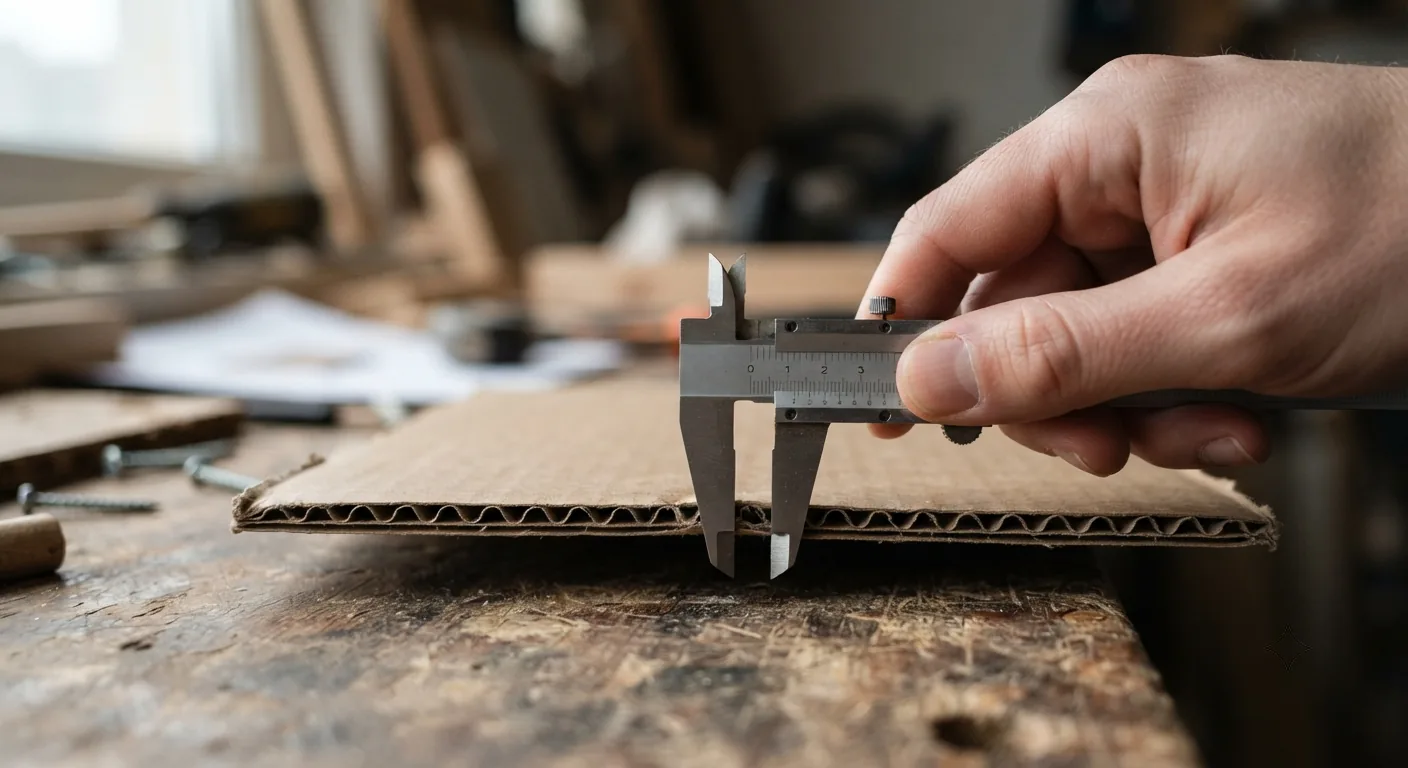
The tradeoffs are real: double-wall board is 6–7 mm thick versus 3–4 mm for single-wall C-flute, which increases dimensional weight billing, reduces print crispness on fine detail, and makes tight-radius folds harder to execute cleanly on a mailer-style dieline.
How Much Weight Can a Mailer Box Hold? The Sizing Variable
If you searched how much weight can a mailer box hold, the honest engineering answer is: the ECT rating sets the ceiling, but box dimensions set the real number. Corrugated box weight capacity falls as box size grows because longer unsupported panels bow and buckle under less load.
Two rules of thumb from corrugated engineering practice:
• A 10 × 8 × 4 inch ECT 32 mailer holds its full rated capacity comfortably. A 24 × 18 × 6 inch mailer in the identical board loses roughly a third of that practical capacity because panel deflection, not edge strength, becomes the failure mode.
• The McKee formula (the industry-standard equation for predicting box compression strength) makes stacking strength proportional to ECT and to the square root of board thickness and box perimeter. In plain terms: bigger boxes need better board even for the same weight.
This is why a competent supplier asks for your product weight and your dimensions before quoting a board grade. Spec the board to the loaded box, not to the weight alone.
Failure Modes: What Overloading Actually Looks Like
Exceeding a mailer box weight limit produces four predictable failures, in escalating order:
1. Bottom-flap sag. The floor bows downward, popping tuck tabs and letting product shift. Typically the first failure to appear once a box is loaded past its practical capacity.
2. Corner crush. Corners take the highest stress concentration in any drop. A crushed corner telegraphs directly to whatever product sits in that corner.
3. Seam split. The glued manufacturer's joint or the scored fold lines tear under sustained load. Once a seam opens, the box has zero remaining structural integrity.
4. Panel blowout. Full side-panel rupture, typically from a drop combined with overload. This is the failure that ends with your product photographed on a customer's doorstep in pieces.
As a general industry pattern, damage claims concentrate on parcels loaded close to their rated limit, because boxes far under or far over spec tend to get caught and re-specced before shipping.
Choosing Your Spec: A 60-Second Decision Framework
Work through these in order:
1. Weigh your heaviest fully loaded shipment, product plus insert plus void fill.
2. Under 20 lb → ECT 32. Between 20 and 65 lb → ECT 44. Above 65 lb, fragile at any weight, or palletized → double-wall ECT 48+.
3. If your box exceeds roughly 18 inches on its longest panel, move one grade up from the answer in step 2.
4. Order a short structural sample run and drop-test it loaded from 30 inches onto a corner before committing to a full production order of custom packaging.
Packify produces corrugated mailer boxes in ECT 32, ECT 44, and double-wall grades, and supplies structural samples before a production run so that loaded drop testing can happen at the sample stage.
Frequently Asked Questions
Our Packaging Products
Elevate Your Brand With Custom Packaging
Get packaging designed for your brand. Free shipping. No minimums.
Start TodayAuthor
Derek Ashworth
Derek Ashworth spent nine years as a structural design engineer at a Midwest corrugated converter, running McKee-formula compression specs and ISTA drop testing for DTC accounts. He now consults for e-commerce fulfillment teams on board-grade selection, and has personally overseen damage-claim audits covering more than two million shipped parcels.