Corporate Gift Boxes vs Retail Packaging: 3 Constraints That Change the Spec
Corporate Christmas gift boxes are branded presentation boxes ordered in runs of 100 to 5,000 units for clients and employees. September 20 is the order date: the day the purchase order is signed and print-ready artwork supplied. That carries 20 to 27 business days of production and puts gifts in the carrier network by November 25.
Corporate gift box packaging is bought once a year and judged in the three seconds before the lid comes off. Retail packaging competes on a shelf against eight adjacent brands and is chosen by the buyer. A gift arrives unsolicited with the recipient’s name on it. Three constraints follow.
Quantity is fixed. You have 340 clients and 210 employees, not a forecast. Order 10 percent above headcount for late additions, damaged returns, and photography samples: on a 550-unit program, 55 spare boxes, cheaper than one November rush reorder.
Every unit ships alone. Retail cartons travel by the pallet inside master cases. Holiday client gifts packaging enters the parcel network as its own shipment, or nested in a corrugated cardboard shipper.
The recipient list is your largest accounts. A crushed corner on a rigid box bound for a seven-figure account is not a packaging complaint, it is an account conversation.
September 20: The Order Date, Worked Backward From December 12
December 12 is the last realistic date branded holiday gifts can enter the carrier network, and the fixed point your packaging production deadlines work backward from. Ground services quoted at 3 to 5 days routinely run 6 to 8 in early December, and gifts arriving after December 20 land on empty desks.
September 20 means one thing: purchase order signed and print-ready artwork supplied on your manufacturer’s dieline. Every date below derives from it.
| Milestone | Recommended | Latest possible |
|---|---|---|
| Format, tier, and quantity locked | September 8 | September 25 |
| Purchase order signed, print-ready artwork supplied | September 20 | October 6 |
| Digital proof approved | September 23 | October 9 |
| Physical prototype and insert tooling approved | October 2 | October 20 |
| Production starts | October 5 | October 21 |
| Production complete | November 11 | November 27 |
| Boxes arrive at kitting location | November 17 | December 3 |
| Kitting complete, parcels handed to carrier | November 25 | December 11 |
What the 20 to 27 Day Production Window Actually Covers
Production runs 15 to 20 business days for rigid construction plus 5 to 7 for foil and emboss, which is where 20 to 27 comes from. A no-foil program lands at the low end. Both columns are built on the 27-day ceiling and 3 to 6 days of domestic ground freight, so neither holds production slack. Overseas sourcing adds 28 to 35 days of ocean freight and moves the order date to early August.
The columns sit 16 days apart, and those 16 days are the entire buffer. Order September 20 and a failed prototype costs a week. Order October 6 and it costs the program. Skip the physical prototype only on repeat orders running an unchanged dieline: on any first run with foil, emboss, or a Pantone-matched flood color, it catches the color the screen rendered wrong.
Insert tooling runs on its own clock. Die-cut foam needs a cutting die at 7 to 10 business days, quoted separately from the box and often carrying its own 250-unit minimum. Approve it on the box prototype date or the insert becomes the late item.
Kitting is the only leg that scales with quantity. One packer assembles roughly 25 to 40 boxes per hour on a five-item gift, so the November 17 to November 25 window covers 800 units with two people. At 2,000 units it needs four packers, or box delivery moves to November 10. Confirm throughput with your 3PL before accepting these dates.
3 Gift Tiers: Executive at 25 Units, Team at 2,000
Tiering is what makes branded corporate gift boxes affordable at scale. One spec across 800 recipients either overspends on the volume tier or underdresses the top 50 relationships.
| Tier | Typical count | Construction | Finish | Insert |
|---|---|---|---|---|
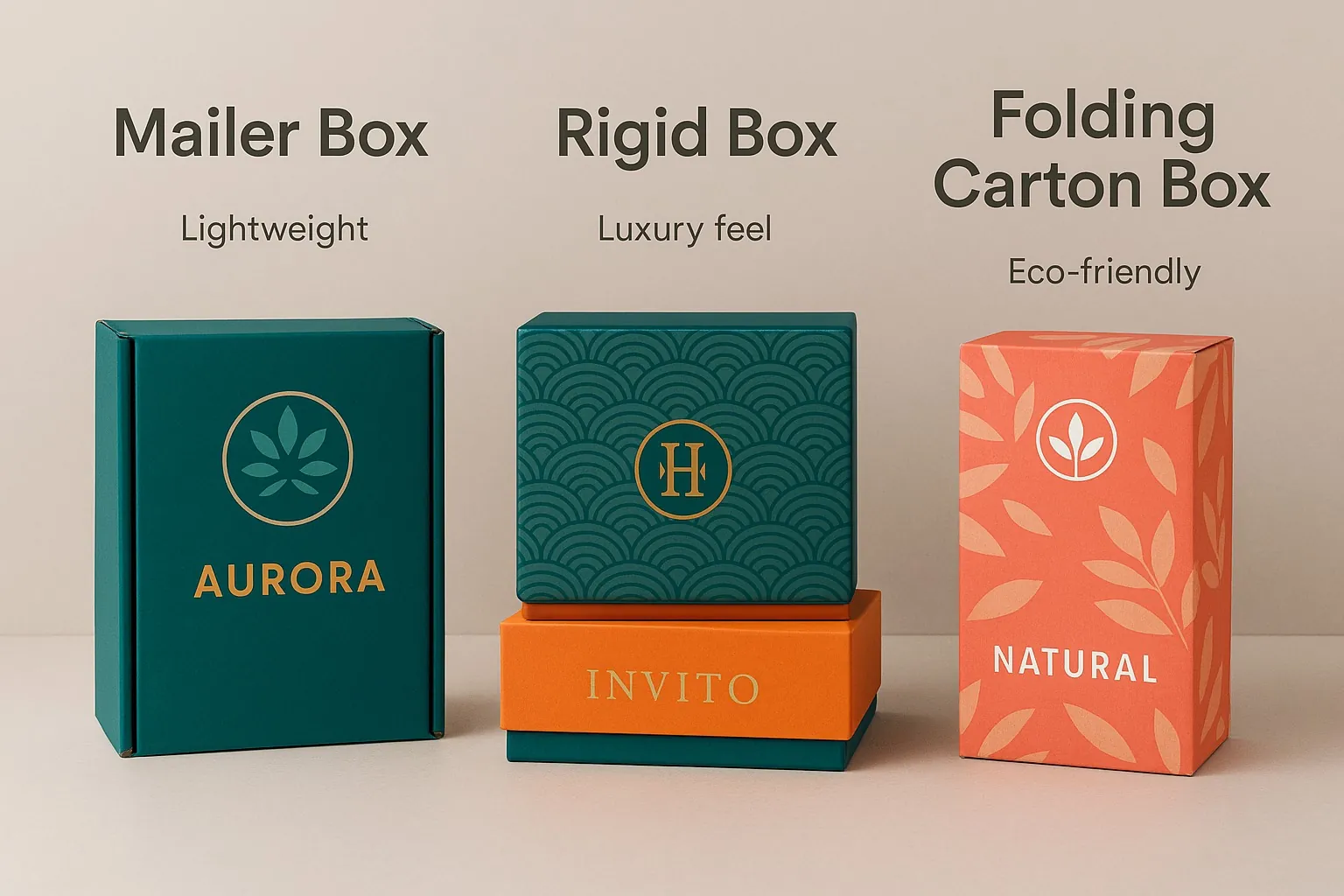
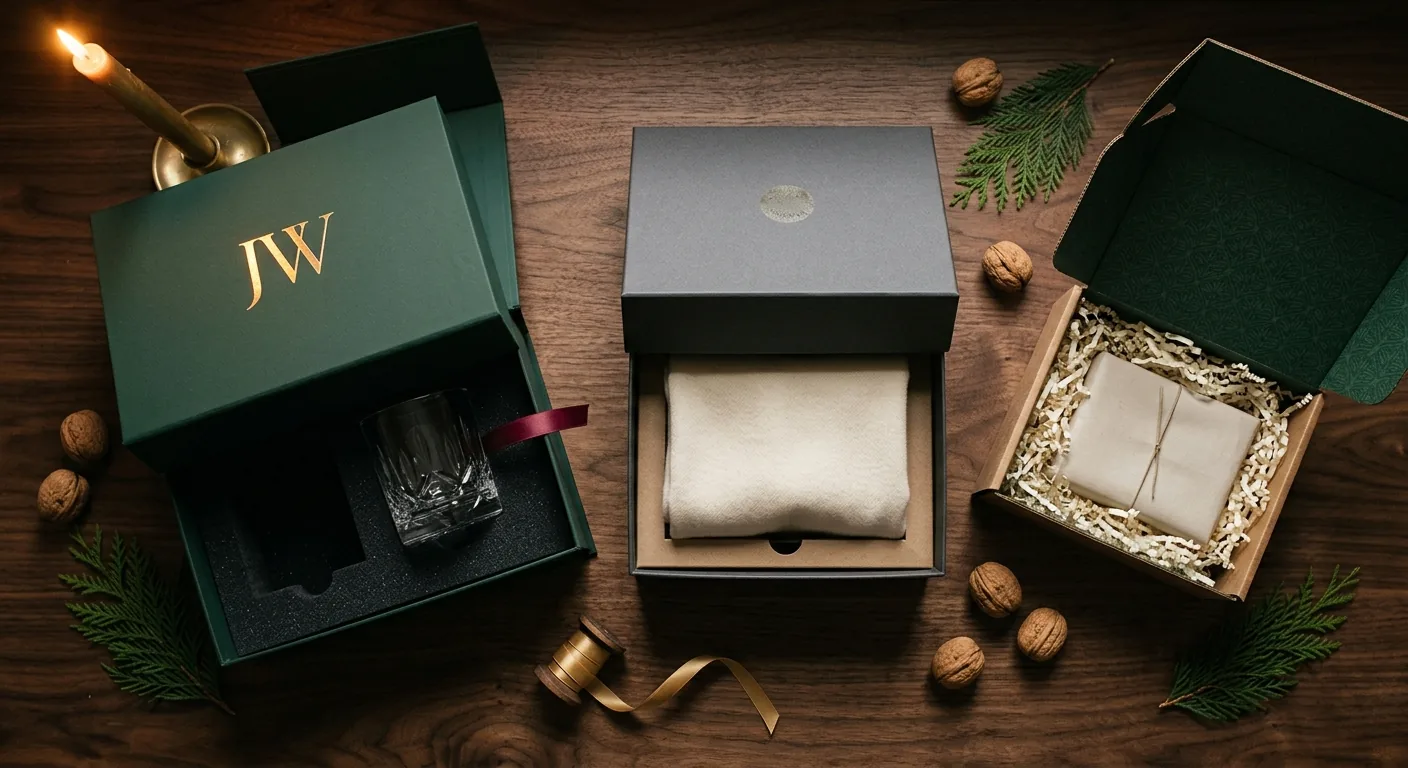
| Executive | 25 to 75 | Rigid box, 2mm greyboard, magnetic closure | Soft-touch, gold foil logo, blind deboss | Die-cut foam, ribbon pull tab |
| Client | 200 to 800 | Two-piece rigid box or folding cartons | Matte lamination, spot foil logo | Die-cut paperboard platform |
| Team | 300 to 2,000 | E-flute mailer boxes | Two-color print, full-color interior | Crinkle fill or no insert |
Consolidating Tiers Onto One Board and One Foil Die
Rigid box unit cost drops sharply between 100 and 1,000 units, so consolidating client and team tiers onto one board caliper often beats two short runs. A foil die is one-time tooling: one logo die stamping all three tiers spreads that cost across the program.
Foil Never Matches Pantone, and 0.6mm Is the Emboss Limit
Foil is stamped from metallized film, not printed, so it will never match a Pantone code. It comes from a fixed stock range: bright gold, matte gold, silver, copper, and colored foils including brand-red and brand-blue. If your brand color must be exact, print it as a flood Pantone and stamp foil on the logo mark only.
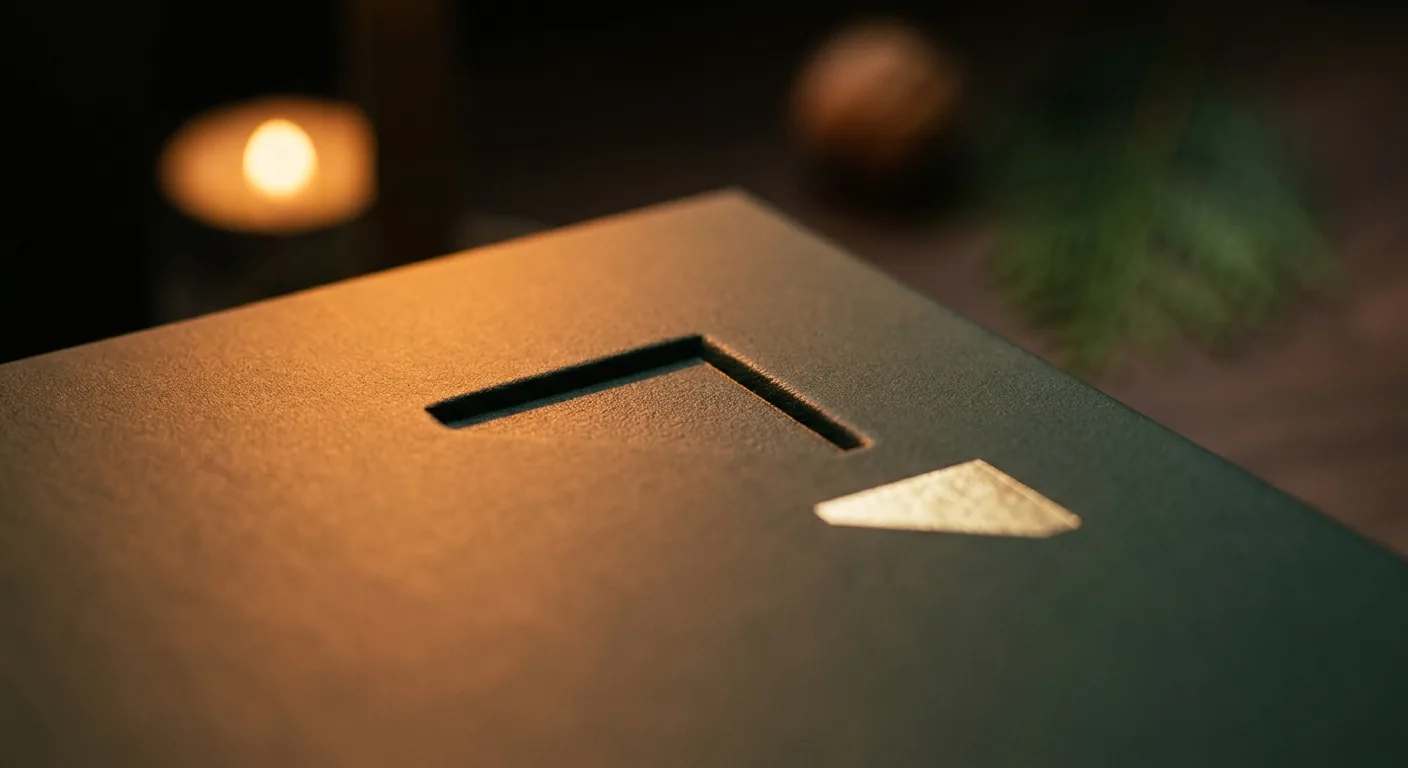
Specifications worth writing into the purchase order start with blind emboss depth of 0.4mm to 0.6mm on 2mm greyboard. Past 0.6mm the fibers crack at the shoulder.
Soft-touch lamination runs at 1.2 mil, the caliper that resists fingerprinting on dark stock.
Foil-to-print registration tolerance is plus or minus 0.5mm, a separate spec from emboss depth. Design the logo so a 0.5mm shift is invisible.
Deboss beats emboss on dark navy and black soft-touch: a debossed mark catches shadow, while a raised mark on matte reads flat from three feet. Same die, no extra pass.
ECT-32 Board and the DIM Math on Box Height
Specify E-flute at 1.5mm and ECT-32 board for any gift box shipping as its own parcel. ECT-32 means the board withstands 32 pounds per inch of edge crush, enough for a standard parcel stack. Rigid boxes have no flute and depend on a shipper or a mailer box around them.
Die-cut paperboard platforms present contents at an angle, cost less, and suit flat items: notebooks, gift cards, apparel. Die-cut foam immobilizes glassware, bottles, and electronics above roughly $75 of contents.
Dimensional weight decides shipping cost more often than actual weight, and carriers round up to the next whole pound. At a DIM divisor of 139, a 12 by 9 by 5 inch box calculates to 3.88 pounds and bills at 4. The same footprint at 12 by 9 by 6 calculates to 4.66 and bills at 5. One inch of headroom adds a billable pound to all 600 parcels. Set depth from gift box sizes by gift type first, then size the box.
5 Mistakes Corporate Gifting Buyers Make
Five decisions account for most of the December programs that arrive late, off-color, or overbilled, and every one of them is made before production starts.
| Mistake | What it costs | Fix |
|---|---|---|
| Ordering boxes and gift contents on separate timelines | Boxes arrive before contents or the reverse, and kitting labor gets booked twice | One delivery date for both at kitting, targeting November 17 |
| Approving foil from a digital proof | Foil renders as flat yellow on screen and reads brassy in hand | Require a physically stamped sample before the full run |
| Quoting the insert after the box | Foam tooling at 7 to 10 business days lands after production ends | Approve insert tooling on the prototype date, October 2 |
| Sizing the box to the largest gift | Empty headroom adds a billable pound per parcel | Size to contents plus 0.25 inch clearance per side |
| Sending identical boxes to all tiers | Top accounts get commodity treatment, volume tier gets overspend | Three tiers sharing one foil die |
Personalization Has to Be Locked at Artwork Stage
Box-level personalization, meaning a printed recipient name, needs digital printing and a variable data file locked at artwork stage. It cannot be added once production starts.
Frequently Asked Questions
Our Packaging Products
Elevate Your Brand With Custom Packaging
Get packaging designed for your brand. Free shipping. No minimums.
Start TodayAuthor
Elena Vasquez
Elena Vasquez has managed corporate gifting and seasonal packaging programs for eleven years, most of it running December runs of 500 to 4,000 branded boxes for professional services and SaaS clients. She once approved gold foil from a digital PDF proof on a 1,200-unit executive program and received boxes stamped in a brassy tone that clashed with the client’s navy brand color, a $9,000 lesson in never skipping the physical stamped sample. She now books every foil prototype approval on the same date as insert tooling, because the year after that, foam dies arrived two weeks late and held 900 finished boxes on a pallet.